How to Play Gomoku
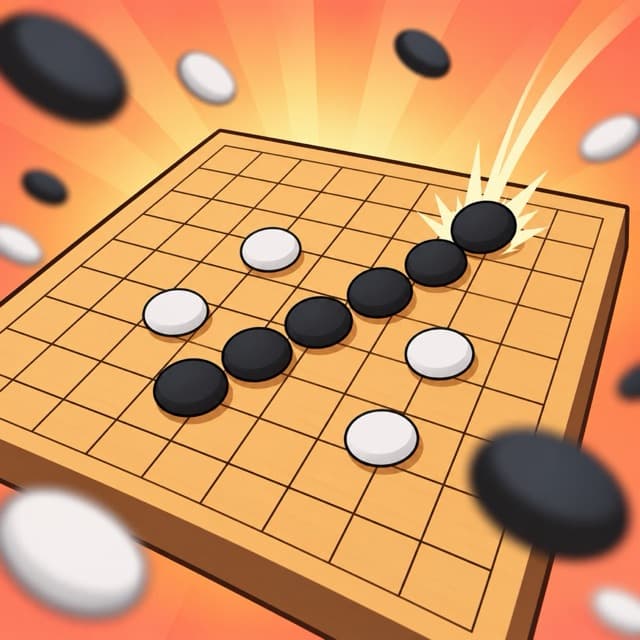
Gomoku is five-in-a-row on a big board — like Tic Tac Toe grown up. Players take turns placing stones, and the first to make an unbroken line of five wins. It rewards spotting threats early and building two at once.
By the Multiplayer Games team · Updated · Rules checked against the sources below
Objective
Be first to make an unbroken line of five of your stones in any direction.
Setup
An empty 15×15 board. Black usually goes first.
Gomoku rules, step by step
- Place a stone. Take turns placing one stone on any empty intersection.
- Build lines. Line up your stones horizontally, vertically or diagonally.
- Five wins. The first unbroken line of five wins immediately.
- Draw. If the board fills with no five in a row, it's a draw.
Gomoku variants, and the rules we use
Gomoku is played slightly differently from place to place. These are the variants you're most likely to meet:
- Renju. Black may not make double-threes, double-fours or overlines, and opening rules balance the game.
- Exactly five. Six or more in a row doesn't count.
- Swap2. An opening protocol where players can swap colours, used in tournaments.
How Gomoku works in Multiplayer Games:
- Freestyle: five or more in a row wins.
- 15×15 board.
- First move alternates between rounds so the first-player advantage evens out.
Gomoku strategy for beginners
- An 'open four' — four in a row with both ends empty — can't be blocked. Aim to make one.
- Create a double threat, like two open threes at once; your opponent can only block one.
- Block open threes as soon as they appear, before they become open fours.
- Play near the centre early so your lines have room in every direction.
Common mistakes to avoid
- Only attacking and missing your opponent's open three.
- Building lines towards the edge of the board where they run out of space.
Gomoku terms explained
- Open three
- Three in a row with both ends empty — a threat that must be answered.
- Four
- Four in a row; it must be blocked immediately.
- Double threat
- Two winning threats at once, usually decisive.
- Overline
- Six or more in a row. It wins in freestyle, but not in Renju.
A short history of Gomoku
Gomoku, 'five pieces' in Japanese, was being played in Japan by the 1800s on Go boards with Go stones, and similar five-in-a-row games appear elsewhere in East Asia.
Because the first player has a big advantage, the professional variant Renju adds restrictions for black. In 1994 Victor Allis proved that in freestyle Gomoku on a 15×15 board, the first player can always force a win.