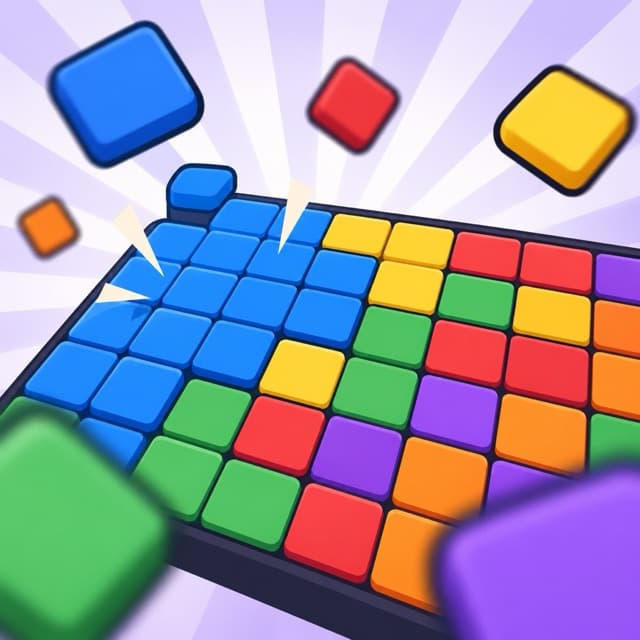
How to Play Filler
Filler is a fast colour-territory game. Start in opposite corners of a colourful grid and grow your area by changing its colour — every matching tile you touch joins your side. Grab the most of the board to win.
By the Multiplayer Games team · Updated · Rules checked against the sources below
Objective
Control more tiles than your opponent when neither of you can grow any further.
Setup
The board is a grid of randomly coloured tiles. You start in one corner, your opponent in the opposite one.
Filler rules, step by step
- Pick a colour. On your turn, choose a colour for your whole territory.
- Grow. Every tile of that colour touching your territory is absorbed into it.
- Colour limits. You can't choose your own current colour or your opponent's.
- Finish. When neither player can gain any more tiles, the bigger territory wins.
Filler variants, and the rules we use
Filler is played slightly differently from place to place. These are the variants you're most likely to meet:
- Solo flood. Fill the whole board alone in as few moves as possible.
- Bigger boards. More squares and colours make planning several moves ahead more important.
How Filler works in Multiplayer Games:
- 8 rows × 7 columns, 6 colours.
- Player one starts top-left, player two bottom-right.
- Both your colour and your opponent's are blocked on your turn.
- A tie is possible.
Filler strategy for beginners
- Look one move ahead: pick colours that open up big patches next turn, not just this one.
- Race towards the centre — it connects to the most tiles.
- Pick the colour your opponent needs most to slow their growth (you block them from choosing it).
Common mistakes to avoid
- Always taking the biggest immediate gain and boxing yourself into a corner.
- Ignoring where your opponent is heading.
Filler terms explained
- Flood
- Taking every square of the chosen colour that touches your area.
- Blocking
- Holding a colour your opponent needs so they can't pick it.
A short history of Filler
Filler belongs to the 'flood fill' family of colour puzzles, named after the computer graphics algorithm that spreads a colour across connected areas. Single-player versions such as Flood-It challenge you to fill the whole board in a set number of moves.
The two-player head-to-head version became widely known through iMessage games on iPhone, where it's one of the quickest strategy games to pick up.